What Is Mindfulness and Why It Matters
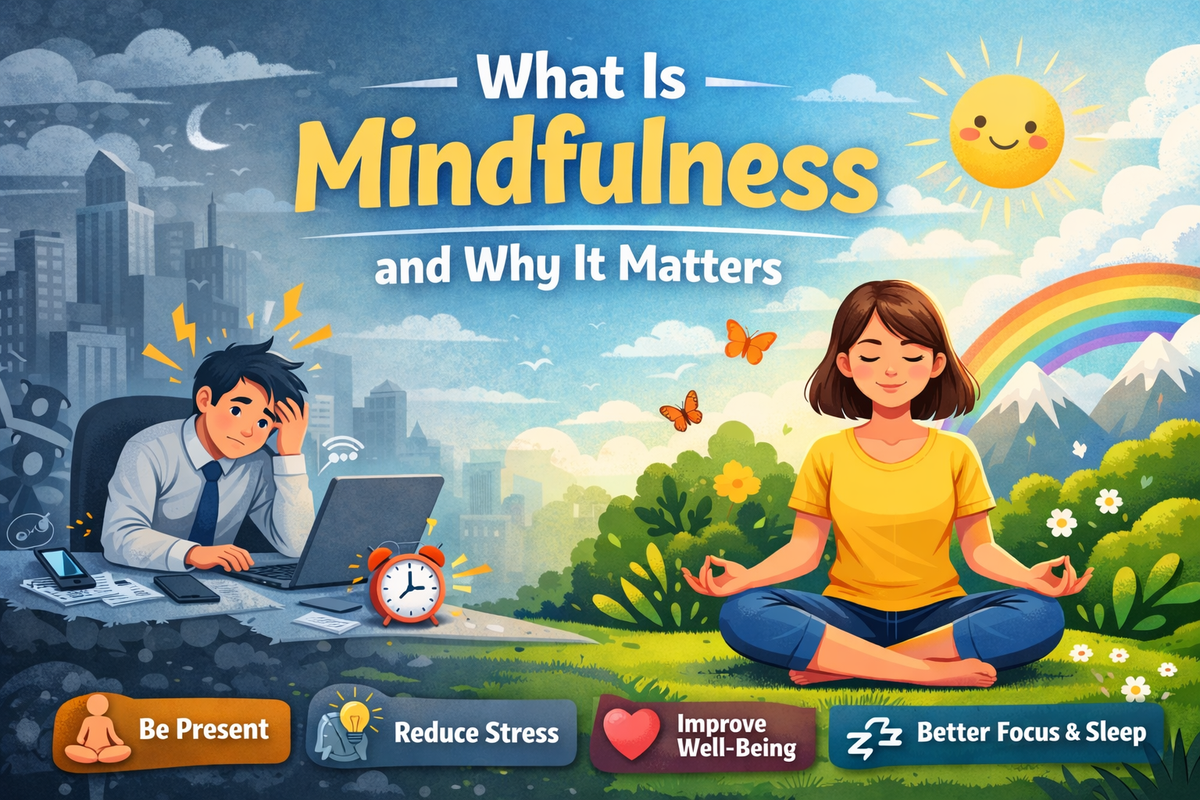
In today’s fast-moving world, many people find themselves constantly distracted, stressed, and mentally exhausted. With endless notifications, responsibilities, and worries about the future, it can become difficult to stay present and focused. This is where mindfulness becomes important.
Mindfulness is a simple yet powerful practice that helps people become more aware of their thoughts, emotions, and surroundings. Instead of constantly thinking about the past or worrying about the future, mindfulness encourages individuals to fully experience the present moment.
Understanding mindfulness and its importance can help improve mental clarity, emotional balance, and overall well-being.
Key Takeaways
- Mindfulness means being fully aware of the present moment.
- It helps reduce stress and improve emotional balance.
- Practicing mindfulness can improve focus and mental clarity.
- Small daily habits can help build mindfulness over time.
Table of Contents
- Understanding Mindfulness
- The Origins of Mindfulness
- How Mindfulness Works
- Benefits of Practicing Mindfulness
- Simple Ways to Practice Mindfulness
- Mindfulness in Daily Life
- Conclusion
- Frequently Asked Questions
“Mindfulness is the practice of being fully present in the moment, allowing the mind to observe thoughts and emotions without judgment.”
Understanding Mindfulness
Mindfulness is the practice of paying attention to the present moment without judgment. It involves being fully aware of what you are doing, feeling, and thinking at any given time.
Rather than allowing the mind to wander endlessly, mindfulness encourages you to observe your thoughts and emotions calmly. This awareness helps people respond to situations more thoughtfully instead of reacting automatically.
Mindfulness does not require complicated techniques. It simply involves slowing down and becoming more conscious of the present moment.
The Origins of Mindfulness
Mindfulness has its roots in ancient meditation practices, particularly in Buddhist traditions that emphasize awareness and mental clarity. However, over time mindfulness has evolved into a widely accepted psychological practice used around the world.
Today, mindfulness is commonly used in therapy, stress management programs, and wellness practices. Many psychologists and health professionals recommend mindfulness as a way to improve mental health and emotional stability.
How Mindfulness Works
The human mind often moves quickly between past memories and future concerns. This constant mental activity can create stress and anxiety.
Mindfulness helps interrupt this pattern by bringing attention back to the present moment. When people practice mindfulness regularly, they begin to notice their thoughts and emotions without becoming overwhelmed by them.
This awareness allows individuals to manage stress more effectively and develop a calmer mindset.
Benefits of Practicing Mindfulness
Practicing mindfulness can have several positive effects on both mental and physical health.
Reduced Stress
Mindfulness helps people become more aware of their reactions to stressful situations. This awareness makes it easier to remain calm and avoid unnecessary emotional pressure.
Improved Focus and Concentration
By training the mind to stay present, mindfulness improves concentration and reduces distractions.
Better Emotional Control
Mindfulness allows individuals to observe emotions without immediately reacting to them. This leads to better emotional regulation and more balanced decision-making.
Improved Mental Well-Being
Regular mindfulness practice can increase feelings of calmness, clarity, and overall life satisfaction.
Simple Ways to Practice Mindfulness
Mindfulness does not require long meditation sessions or special equipment. It can be practiced in everyday life through small changes in awareness.
Some simple methods include:
- Paying full attention while breathing slowly
- Observing your surroundings carefully during a walk
- Eating meals slowly and focusing on the taste and texture of food
- Taking a few minutes each day to sit quietly and observe your thoughts
Even a few minutes of mindfulness practice each day can make a noticeable difference over time.
Mindfulness in Daily Life
Mindfulness can be applied to almost any activity. Whether working, studying, exercising, or spending time with others, staying present improves the quality of the experience.
For example, instead of multitasking constantly, focusing on one task at a time allows the mind to work more efficiently and reduces mental fatigue.
When practiced consistently, mindfulness gradually becomes a natural way of thinking and living.
Conclusion
Mindfulness is a simple but powerful practice that helps people stay present and aware in a busy and demanding world. By focusing on the present moment and observing thoughts without judgment, individuals can develop greater mental clarity and emotional balance.
Although life will always include challenges and distractions, mindfulness provides a practical way to manage stress and improve overall well-being. With regular practice, it becomes easier to remain calm, focused, and connected to the present moment.
Frequently Asked Questions
Is mindfulness the same as meditation?
Meditation is one method used to practice mindfulness, but mindfulness itself is a broader concept that can be applied to many everyday activities.
How long should mindfulness be practiced each day?
Even five to ten minutes of mindfulness practice daily can produce positive effects over time.
Can mindfulness reduce anxiety?
Yes. Many studies suggest that mindfulness can help reduce anxiety by teaching individuals to observe thoughts without becoming overwhelmed by them.