Kharg Island: Iran’s Strategic Oil Hub in the Persian Gulf
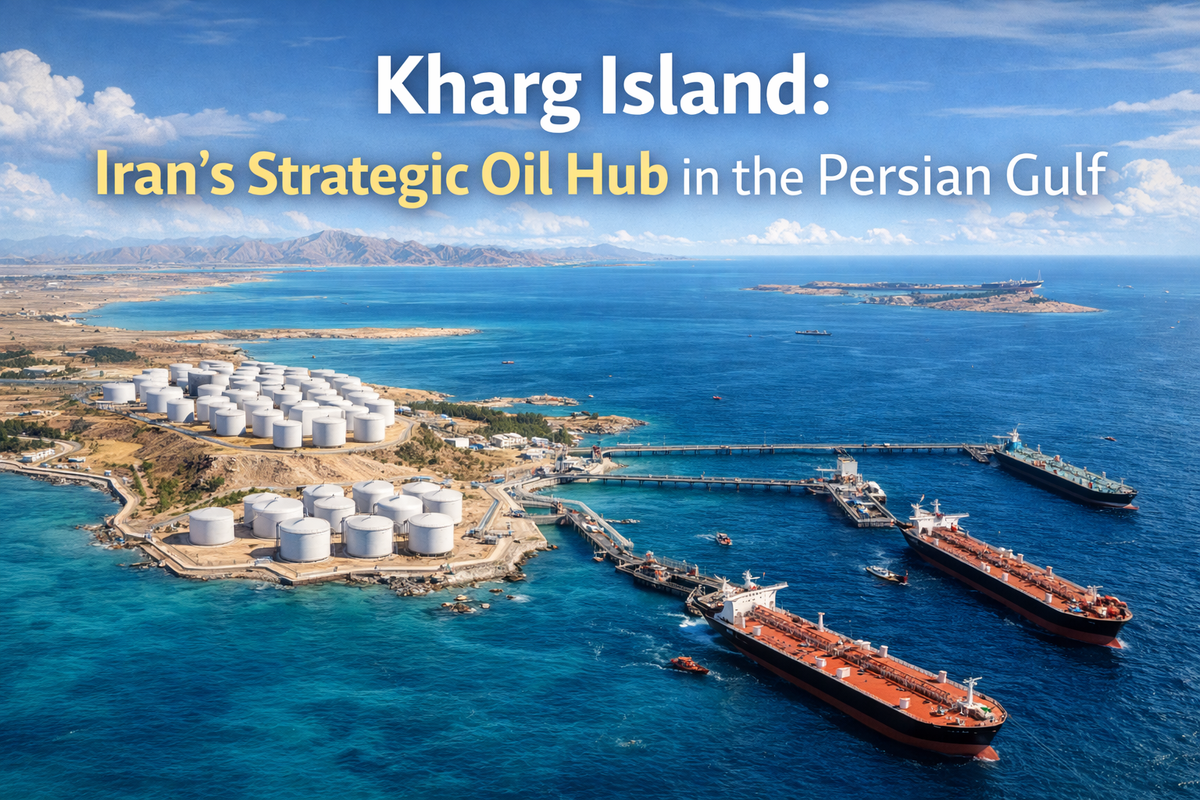
Most people have never heard of Kharg Island. It doesn't show up on travel bucket lists, and you won't find Instagram reels about its beaches. But if you follow energy markets or geopolitics at all, this small patch of land in the Persian Gulf matters a lot. It's Iran's main oil export terminal, and what happens there ripples out into global energy prices faster than most people realize. Let's expand your knowledge below:
Where Is Kharg Island Located?
Kharg Island sits about 25 kilometers off the Iranian coast in the northern Persian Gulf, administratively part of Bushehr Province. The whole island covers roughly 20 square kilometers. Small. Unremarkable on a map.
But size is deceptive here. The island hosts some of the most significant oil export terminals in the entire Middle East. Crude oil tankers load up here constantly and head out to markets across Asia and, occasionally, Western countries. Its position near major shipping routes is exactly what makes Kharg Island so hard to ignore from an energy security standpoint.
Why Kharg Island Is Important for Global Oil Supply?
The island's entire identity, at least in modern times, is built around one thing: oil exports. Iran's crude oil gets pumped in through pipelines from inland fields, stored in enormous tanks, and then loaded onto tankers bound for buyers around the world.
Why does this matter beyond Iran's borders?
Kharg Island is Iran's main oil export terminal full stop. It connects Iranian production directly to global energy markets. When activity there slows down or ramps up, analysts notice. It influences global oil price stability in ways that ripple into fuel costs, shipping rates, and broader market sentiment. Energy analysts in the U.S. and Europe keep a close eye on tanker traffic around the island for exactly this reason.
History of Kharg Island
The island's story goes back much further than the oil era. Archaeological evidence points to ancient habitation and trade connections across the Persian Gulf going back centuries. During the 18th century, the Dutch East India Company set up operations there, building fortifications and using it as a base for controlling regional trade routes. It was a genuinely important commercial outpost at the time.
The 20th century changed everything. Once Iran developed its oil export infrastructure on the island, Kharg's entire purpose shifted and its profile in global affairs grew dramatically.
Kharg Island During the Iran–Iraq War
The Iran-Iraq War (1980–1988) put Kharg Island squarely in the crosshairs. Iraqi forces understood that disrupting the island meant hitting Iran's economy hard. Airstrikes and missile attacks came repeatedly throughout the conflict.
And yet Iran kept the oil moving. Not without damage, not without difficulty but the export operation never fully collapsed. That resilience is a big part of why the island's reputation as a critical energy hub stuck.
Infrastructure and Oil Facilities on Kharg Island
The facilities on Kharg Island are genuinely massive in scale. We're talking about infrastructure built to handle supertankers not small cargo vessels.
The island includes large crude oil storage tanks, multiple oil loading jetties, offshore loading platforms, pipeline connections running back to Iranian oil fields, and dedicated tanker docking facilities. Together, these allow Iran to move millions of barrels of oil through the island on a regular basis. The infrastructure has been upgraded several times over the decades, both to increase capacity and to make operations more resilient to potential disruptions.
Environmental and Geographic Features
Kharg Island has a hot desert climate — brutal summers, mild winters, not much vegetation. The arid conditions limit what grows there, though some desert-adapted plant species manage fine.
The marine environment around the island is a different story. The Persian Gulf supports real biodiversity fish populations, coral formations, various marine species. The problem is that decades of heavy industrial activity have taken a toll. Oil spills and marine pollution are legitimate environmental concerns in the waters around Kharg, and that tension between industrial use and ecological health hasn't been resolved.
Kharg Island and Global Energy Markets
For anyone watching oil markets from the outside, Kharg Island is basically a data point that moves prices. Iran is one of the world's largest oil producers, and the island handles a significant chunk of those exports. When something changes there sanctions tighten, exports surge, infrastructure gets disrupted the effects show up in crude oil supply numbers and, eventually, at the pump.
The market impacts are fairly direct: fluctuations in global crude oil supply, shifts in international oil prices, downstream effects on energy investors, and broader geopolitical conversations about Middle East energy resources. Energy news outlets track shipping activity near the island for good reason.
Strategic Importance in the Persian Gulf
The Persian Gulf's oil shipping routes are some of the most consequential waterways on the planet. Kharg Island sits right in this geography. Tankers leaving the island pass through the Strait of Hormuz one of the most critical energy chokepoints in the world, through which a significant portion of global oil supply passes every single day.
That's not an exaggeration. A serious disruption in that strait affects energy markets globally, almost immediately. Kharg Island's proximity to this chokepoint is a constant factor in international security and policy discussions.
Could Kharg Island Become a Tourist Destination?
Honestly, it's a stretch at least for now. The island is locked down as an industrial and security zone. But the Persian Gulf region does have genuinely interesting coastlines, historical sites, and marine ecosystems. If geopolitical conditions ever shifted dramatically enough to open the island up, there's something there historical sites from ancient trade routes, marine biodiversity in the surrounding waters, the cultural heritage of the Bushehr region.
For the foreseeable future though, tourism isn't happening. The island's entire focus is on keeping oil moving.
The Future of Kharg Island
Kharg Island isn't going anywhere as a strategic asset. Iran will almost certainly continue investing in its infrastructure and capacity there. But the longer-term picture is more complicated.
Global oil demand isn't a fixed thing. Renewable energy is growing. International energy policies keep shifting. Regional geopolitics in the Persian Gulf are never entirely stable. All of these factors will shape what Kharg Island looks like in 20 or 30 years.
That said, its location alone guarantees relevance. You can't just relocate a strategically placed island.
Conclusion
Kharg Island is genuinely one of those places where size and importance have almost nothing to do with each other. Twenty square kilometers. Enormous global significance.
As Iran's primary oil export terminal, it sits at the intersection of energy infrastructure, geopolitics, and global market dynamics in a way that few places on earth do. Whether you're an energy analyst, an investor, or just someone trying to understand why Persian Gulf tensions make oil prices jump Kharg Island is a good place to start.
FAQ's
- What is Kharg Island Known for?
Kharg Island is known to be Iran’s main oil export terminal, facilitating a significant amount of crude exports to international energy markets.
- Where is Kharg Island Located?
Kharg Island is located in the northern Persian Gulf, 25 kilometers off Iran’s coast in Bushehr Province.
- Why is Kharg Island Important to International Oil Markets?
Kharg Island connects Iranian crude production to international oil routes, affecting international crude supply levels.
- Does Kharg Island Affect International Oil Prices?
Yes, it does. The exports from Kharg Island are known to affect international crude supply levels.