Daylight Saving Time 2026 : Start Date & U.S. Schedule
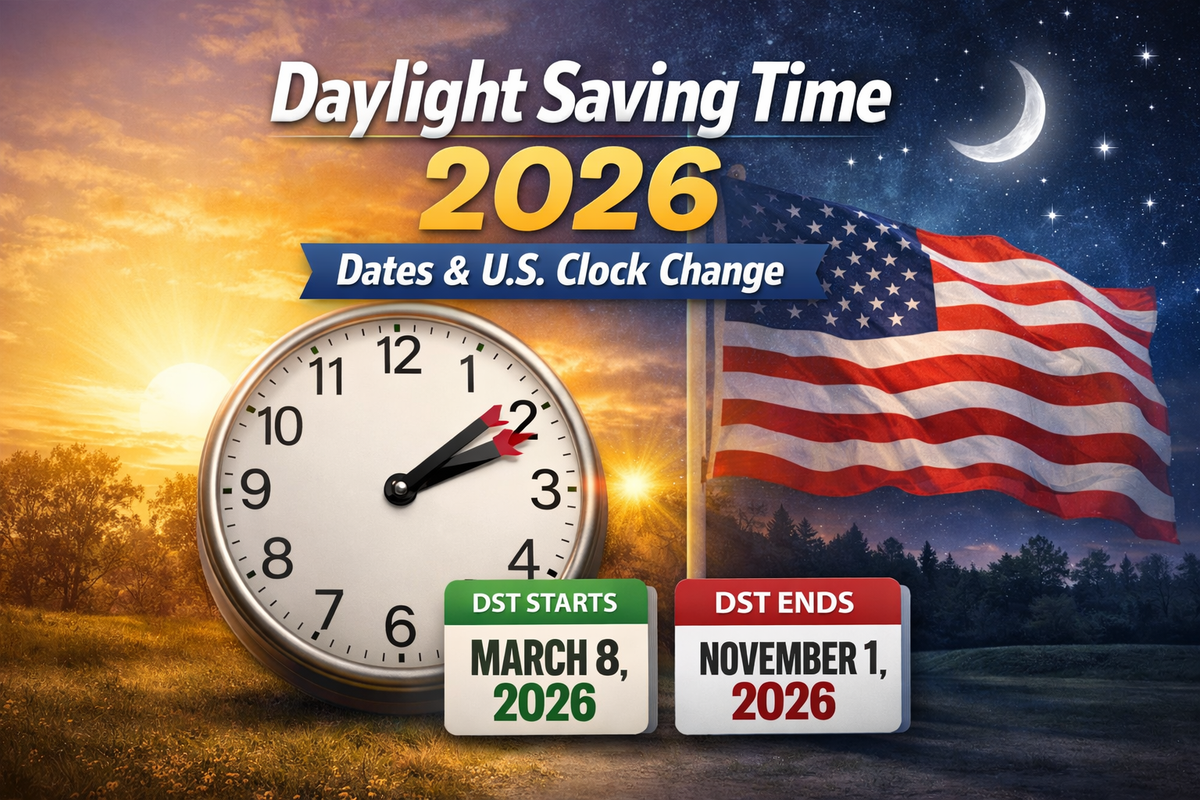
Millions of Americans change their clocks every year to comply with Daylight Saving Time (DST), which is a seasonal change to make the best use of the extra daylight during long days of the year. In 2026, Americans are expected to change their clocks as the time change is set to occur across most parts of the US.
If you wish to know when Daylight Saving Time starts and ends in 2026, how it works, and why we practice it, then you are on the right page because we have provided you with everything you need to know about Daylight Saving Time 2026.
What Is Daylight Saving Time?
Daylight Saving Time (DST) is the practice of moving clocks forward by one hour during warmer months so that evenings have more daylight and mornings have less. The idea behind DST is simple: by shifting the clock forward, people can take better advantage of natural daylight during the evening hours. In the United States, DST is observed across most states and territories, although some places choose not to participate. The modern schedule for daylight saving time was established under the Energy Policy Act of 2005, which standardized when the clocks change each year.
Daylight Saving Time 2026 Dates in the United States
In 2026, Americans will adjust their clocks twice:
. DST begins: Sunday, March 8, 2026, at 2:00 a.m.
. DST ends: Sunday, November 1, 2026, at 2:00 a.m.
. When DST starts in March, clocks move forward 1 hour (spring forward).
. When DST ends in November, clocks move back 1 hour (fall back).
. This means Americans will lose one hour of sleep in March but gain an extra hour in November.
Why Daylight Saving Time Exists?
The concept that guides the practice of DST can be traced to the need to save energy as well as optimize the usage of daylight hours. However, the concept of DST does not necessarily originate from Benjamin Franklin. The practice of DST as we know it today was popularized during the war as a means to save energy.
The practice of DST was standardized in the United States through the Uniform Time Act of 1966. The main goal of the act was to reduce the confusion that resulted from different states having different DST.
Today, the main reasons for DST include:
. Extending evening daylight during warmer months.
. Reducing the need for artificial lighting.
. Supporting outdoor recreation and retail activity.
. Aligning daylight hours with typical work schedules.
. States That Do Not Observe Daylight Saving Time.
. While most Americans change their clocks, some locations do not observe DST.
The primary places that stay on standard time year-round include:
. Arizona (except for the Navajo Nation)
. Hawaii
These states opted out because the extended daylight hours provide little benefit given their climate and geographic location.
Several U.S. states have proposed eliminating the time change entirely, but federal law currently requires congressional approval for permanent daylight saving time.
How Daylight Saving Time 2026 Affects Daily Life?
Although the time change seems small, shifting the clock by just one hour can influence many aspects of daily life.
Sleep Patterns : As the DST starts, people may experience a disruption in their sleep patterns because their body clocks need to readjust to the new schedule. Experts advise people to go to bed a little earlier before the start of DST.
Work and Productivity: People may experience fatigue after the “spring forward” starts. However, the extra daylight hours may make people more cheerful and willing to go out and exercise after work.
Travel and Transportation: Airlines, trains, and transportation services change their schedules according to the official time change. Travelers need to verify the time while traveling when DST begins or ends.
Digital Devices; Smart phones, computers, and smart home devices change automatically. However, other clocks such as wall clocks, ovens, and car dashboard clocks need to be changed.
Health Effects of Daylight Saving Time
According to research, the transition into DST has health implications for a few days. Research done in the field of Sleep Medicine indicates that the sudden time change may interfere with the body’s natural rhythms for a while.
The health implications may include:
- Problems getting up in the morning
- Short-term sleep loss
- Inability to concentrate
- Increased fatigue
However, the good news is that after a few days, the body gets used to the new time.
Tips to Prepare for Daylight Saving Time 2026
If you wish to ease the transition into DST, here are a few tips for you:
- Adjust Your Sleep Schedule Early
Start going to bed earlier, at least 15-20 minutes, before the start of DST. - Get Morning Sunlight
Sunlight helps the body adjust the biological clock. - Avoid Late-Night Screen Time
Reducing blue light exposure before bed can help maintain healthy sleep patterns. - Check Your Clocks
Remember that not all devices change automatically. Verify that important clocks are set correctly.
Is Daylight Saving Time Permanent in the Future?
The debate over whether to keep or eliminate DST continues in the United States. Several lawmakers have proposed legislation to make DST permanent nationwide.
One proposal, the Sunshine Protection Act, would eliminate the seasonal clock change and keep the country on daylight saving time year-round. Although the proposal has gained attention in Congress, it has not yet become law.
If this legislation comes into effect in the future, Americans might eventually stop changing their clocks twice a year.
Daylight Saving Time Around the World
It seems the United States is not the only country to observe the practice of daylight saving time. There are other places around the world that have the same practice.
Some countries in Europe, Canada, and Australia observe the practice of daylight saving time, although many countries have stopped due to the controversial issue of the practice saving energy Global discussions continue about whether DST should remain in place or be replaced with a consistent year-round time system.
Key Takeaways About Daylight Saving Time 2026 To summarize:
. Daylight Saving Time in the U.S. begins on March 8, 2026.
. Clocks move forward one hour at 2:00 a.m.
. DST ends on November 1, 2026, when clocks move back one hour.
. However, the states of Arizona and Hawaii do not follow DST.
. The time change may cause temporary effects on sleep, productivity, and other daily routines.
. Daylight Saving Time is still an essential part of the yearly schedule, despite the debate.
FAQs
When does Daylight Saving Time start in 2026?
Daylight Saving Time starts on Sunday, March 8, 2026, at 2:00 a.m. in most parts of the United States.
When does Daylight Saving Time end in 2026?
Daylight Saving Time ends on Sunday, November 1, 2026, at 2:00 a.m., when we turn back the clocks by one hour.
Which states in the United States do not follow Daylight Saving Time?
The states that do not follow Daylight Saving Time are Arizona and Hawaii.
Why do we still follow Daylight Saving Time?
Daylight Saving Time is still followed to allow more daylight in the evenings during warm weather so we can enjoy outdoor activities during our free time.